
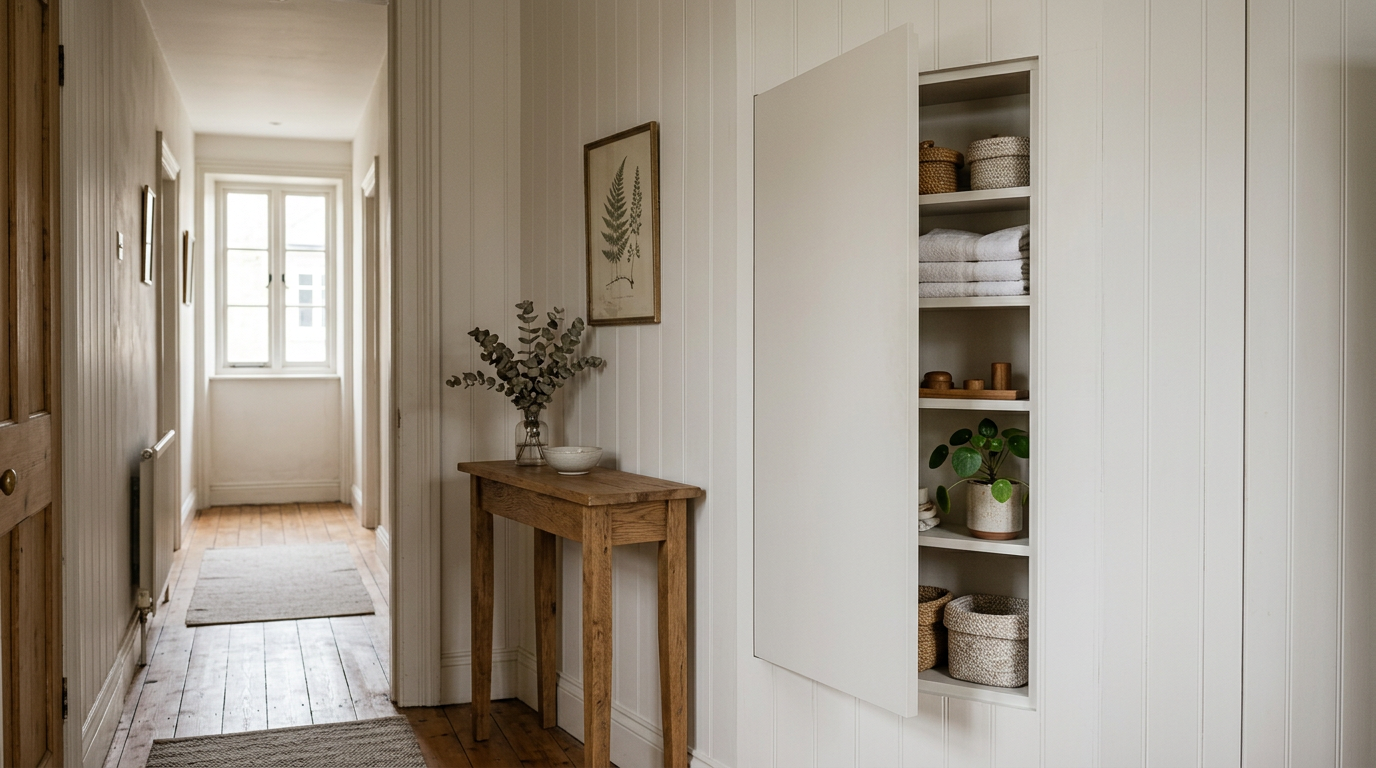
Small hidden door cabinet ideas tuck storage behind a mirror, wall panel, or piece of art. Pick a spot with spare wall depth, use concealed hinges, and match the finish to the wall. The cabinet disappears, and the room stays tidy.
I like this approach because it solves clutter without adding furniture. You get storage, and the room still looks calm. Few small-space tricks work this quietly.
This guide gives you 7 simple hidden cabinet ideas for compact homes. Each one stays practical and easy to picture. Keep reading, and your clutter may finally have somewhere to go.
Why Small Hidden Door Cabinets Work in Compact Homes
A hidden cabinet gives you storage without adding visual weight. The door blends into the wall or furniture, so the room feels open. That matters most in small apartments and narrow hallways.
The design also protects your style. You can hide cleaning supplies, spare linens, or a router box behind a clean surface. The room keeps its look, and the mess stays out of sight.
Safety comes first with wall projects. Check for wires and pipes before you cut into any wall, and use a stud finder to locate the framing. If you feel unsure, ask a licensed pro.
| Idea | Best Spot | Good For Storing |
|---|---|---|
| Mirror cabinet | Bedroom or dressing area | Jewelry and accessories |
| Wall panel cabinet | Living room or hallway | Small electronics and decor |
| Art-covered cabinet | Bedroom wall | Important papers and small valuables |
| Under-stair cabinet | Stair wall | Shoes, tools, or cleaning gear |
| Sliding TV cover | Living room | Media gear and cables |
1. Hide Storage Behind a Mirror Door
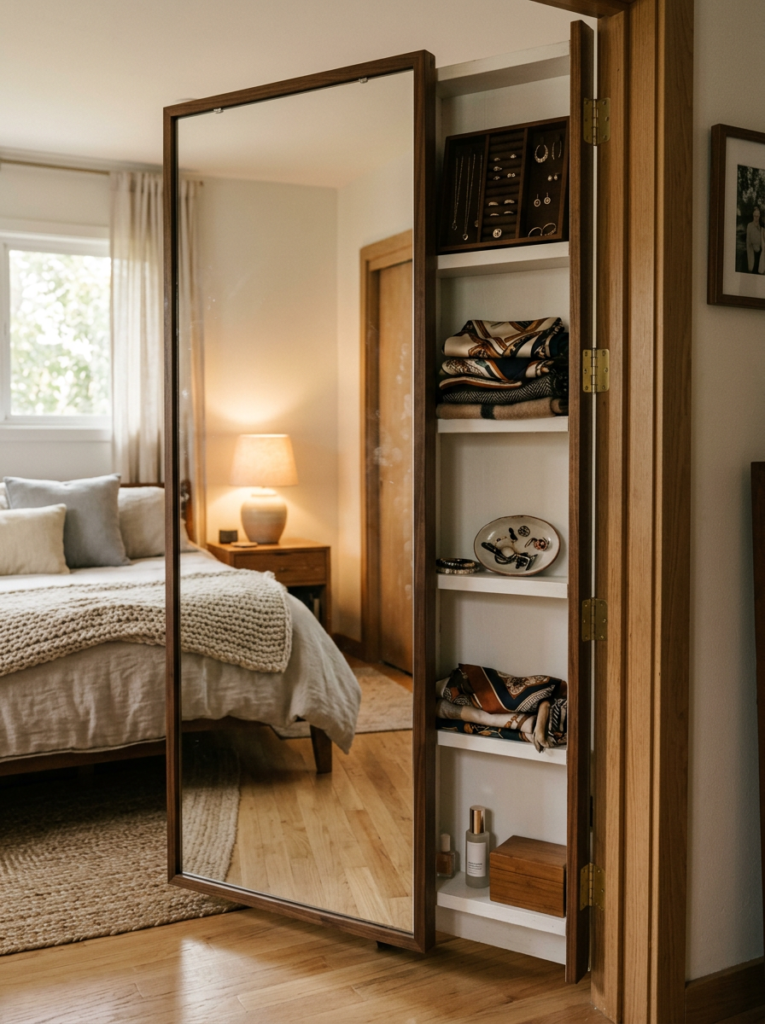
A mirror cabinet is one of the most popular small hidden door cabinet ideas. The mirror swings open to reveal shallow shelves behind it. It suits a dressing area, a bedroom, or an entryway.
The shelves work best for small items. Jewelry, hair accessories, and small bottles all fit well. Keep the shelves shallow so the mirror still sits close to the wall.
Anchor a mirror door carefully. Glass adds weight, so use hinges rated for the load and screw into solid framing. A loose mirror door is not a fun surprise at 7 a.m.
2. Build a Hidden Cabinet Behind a Wall Panel
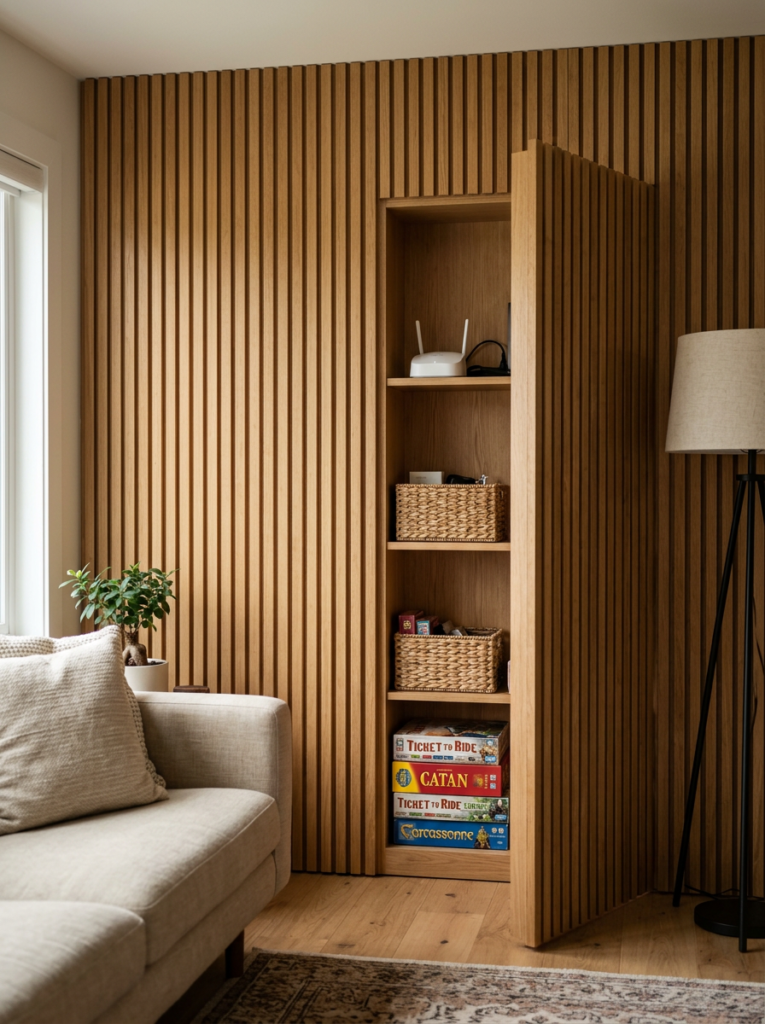
A wall panel cabinet turns a plain wall into storage. The door matches the surrounding panels, so the seams look like part of the design. It works well in a living room, bedroom, or hallway.
Use wall panel details to your advantage. Wood slats, picture molding, or flat paneling all hide a cabinet edge well. Keep the gap narrow and even, so the door blends in.
Choose concealed hinges so no metal shows. A hinge that you can see gives away the secret. Push-to-open hardware removes the need for a handle.
3. Cover a Hidden Cabinet With Art in the Bedroom
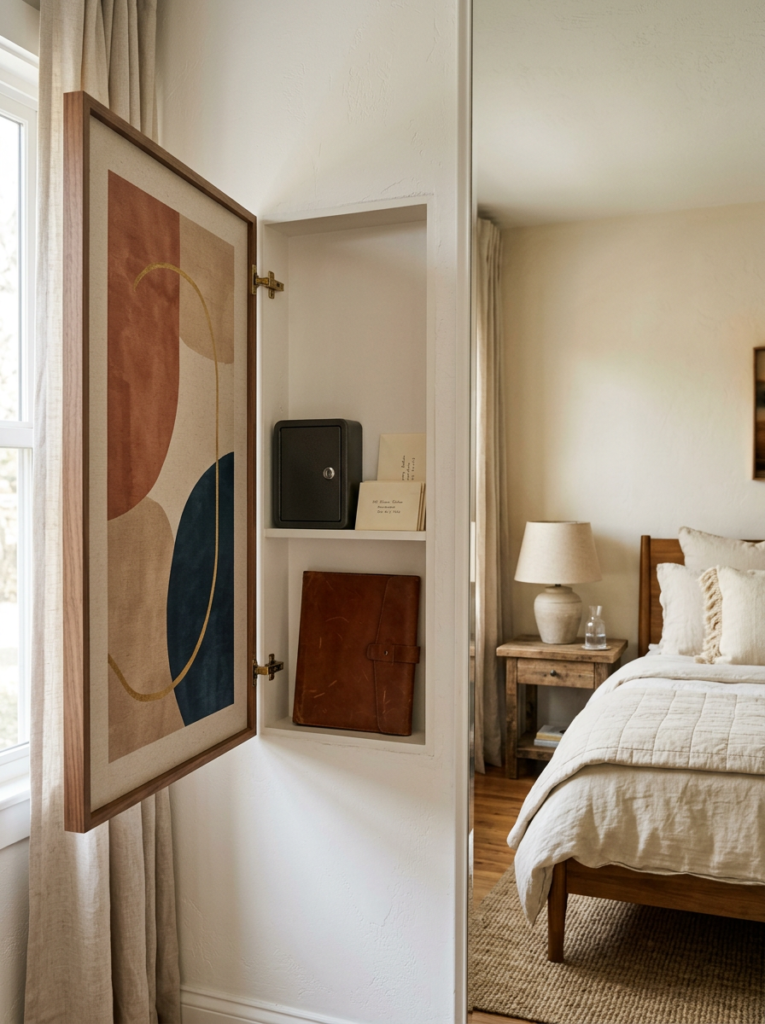
An art-covered cabinet gives you a quiet spot for small, important items. A framed piece hangs on a hinged panel, and a shallow cabinet sits behind it. The wall looks like normal decor.
Keep this idea small and light. Use it for papers, spare keys, or small keepsakes. Heavy items can strain the hinges and pull the frame off the wall.
Pick art that fits the cabinet size. A larger frame hides the edges better than a small one. Add a simple catch or magnetic latch so the frame stays closed.
4. Turn a Stair Wall Into a Hidden Cabinet
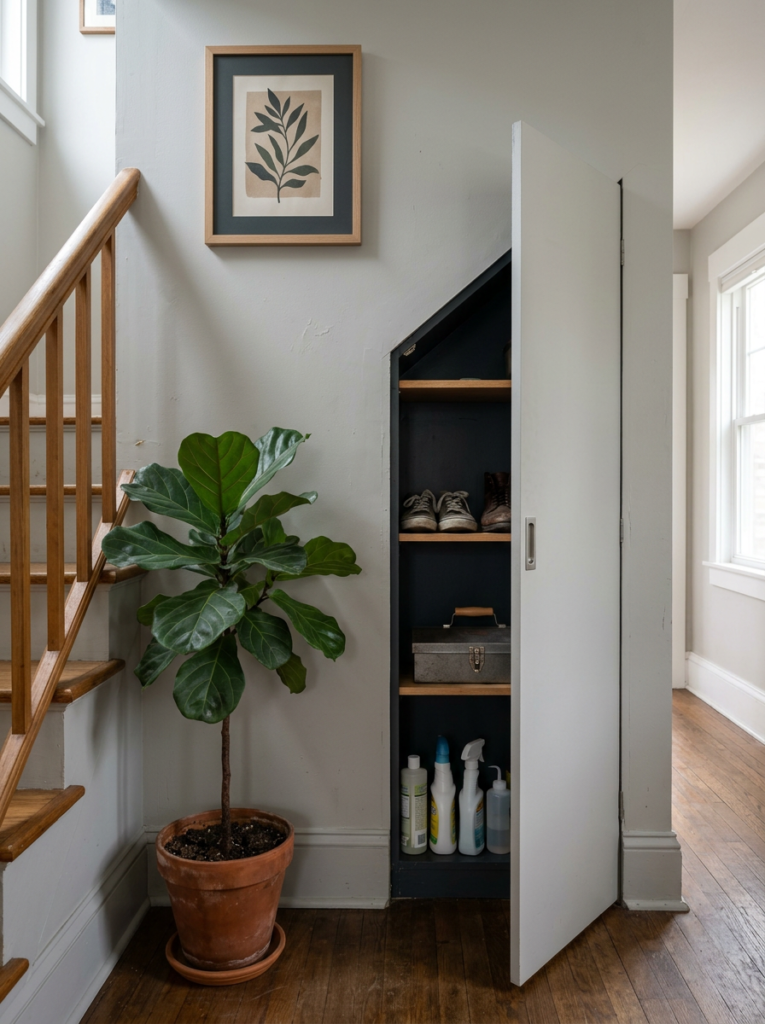
A stair wall makes smart use of an awkward space. The area under or beside the stairs often sits empty. A small hidden door there can hold shoes, tools, or cleaning gear.
Paint the door the same color as the surrounding wall. Keep the seams narrow and skip bulky handles. A push latch or a small recessed pull keeps the surface smooth.
Add a large plant or a framed print nearby to draw the eye away. The distraction helps the door fade into the background. Check the stair structure first, and keep any cuts away from support framing.
5. Hide Media Gear Behind a Sliding Panel
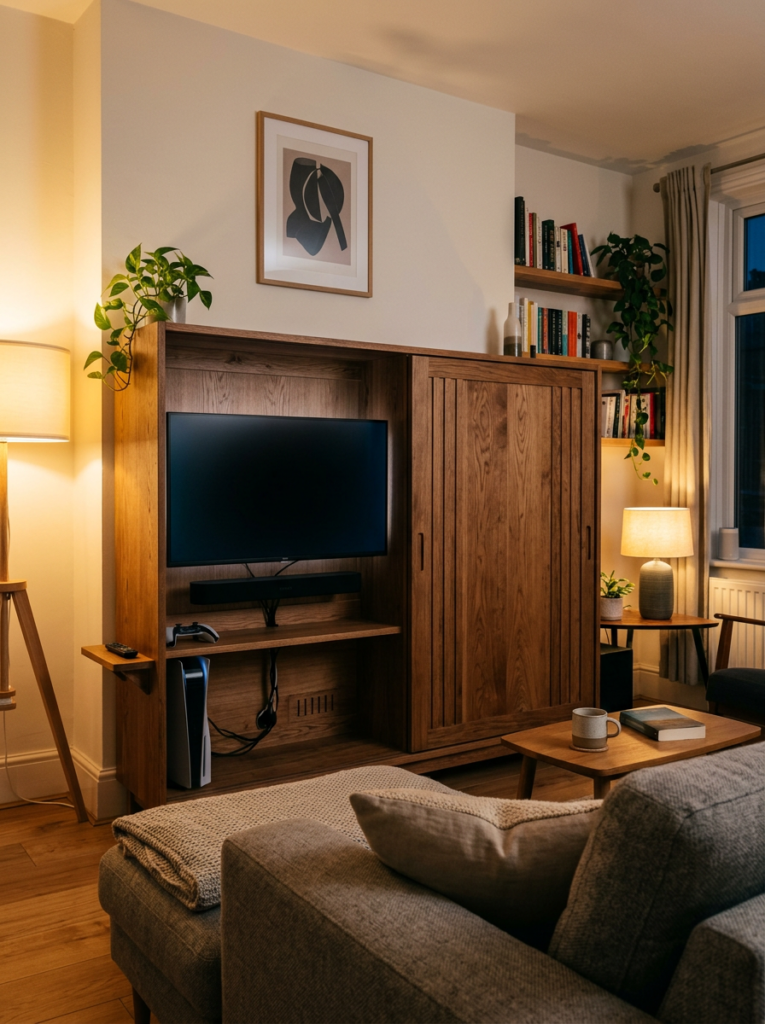
A sliding panel works well for a TV unit. The panel slides across the shelves or cabinet when you want a clean look. When you want to watch, you slide it open.
This idea suits small living rooms. It hides cables, game consoles, and speakers behind a plain surface. The room looks calm even when the gear stays plugged in.
Leave airflow for electronics. Devices need ventilation, so cut small vents or leave a gap at the back. A hidden cabinet that traps heat causes more trouble than it solves.
6. Add a Hidden Cabinet Door in the Entryway
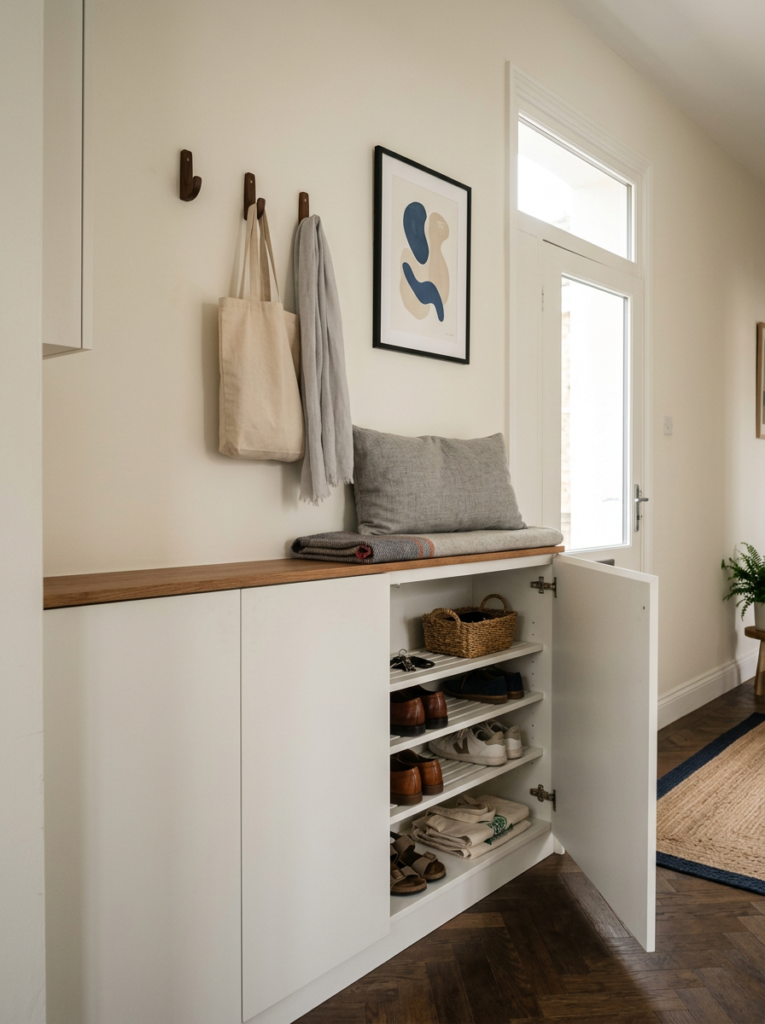
An entryway cabinet keeps shoes, bags, and keys out of sight. A flat-front design with push-to-open doors looks like a plain wall unit. You open it when you need it and close it when you leave.
Some entryway units add a bench top for sitting. Storage sits below the seat, hidden behind a clean front. This suits narrow halls and small apartments.
Keep the inside simple. Use bins or trays for small items, so the shelves stay tidy. A cabinet you can reach without effort gets used every day.
7. Choose Furniture With Concealed Compartments
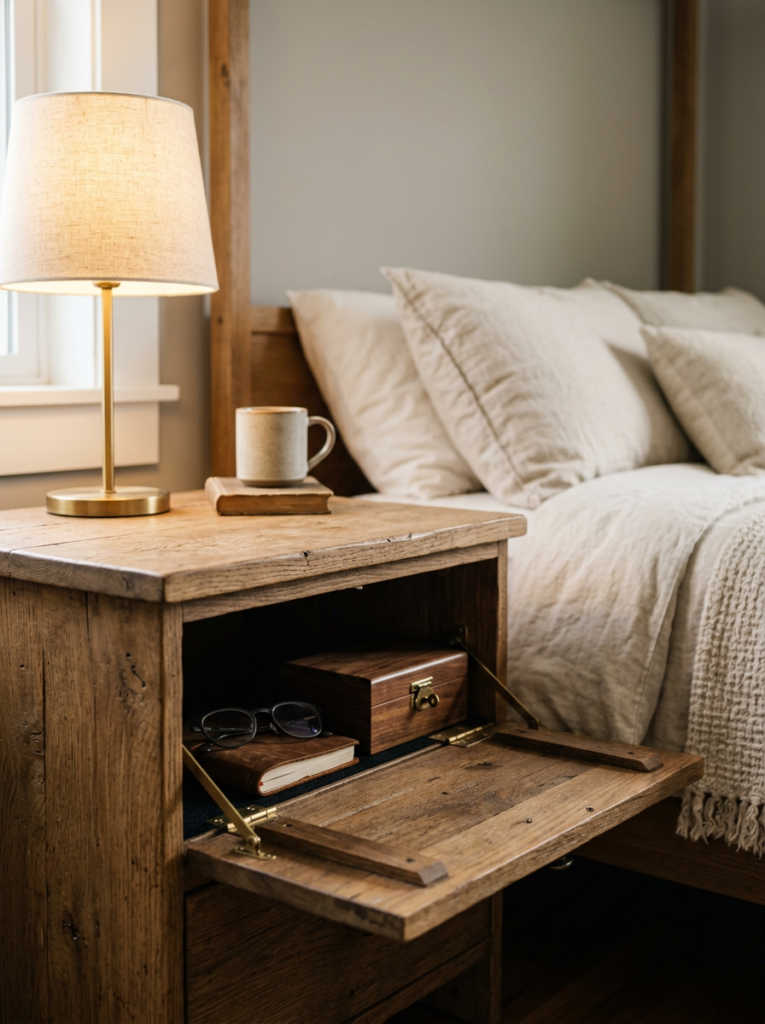
Furniture with hidden compartments gives you storage without any wall work. Nightstands, console tables, and benches often have space for a secret drawer or panel. The compartment hides in the body of the piece.
Hide the hinges to keep the secret. A visible hinge gives the compartment away right away. Concealed hinges keep the front looking solid and clean.
Pick furniture with some space underneath or behind it. A compartment needs room to exist. Keep it simple and easy to use, because a clever trick that frustrates you will not last.
5 Common Mistakes to Avoid With Small Hidden Door Cabinets
A hidden cabinet can fail in a few easy ways. The biggest mistake is cutting into a wall without checking what sits inside. Wires and pipes can run behind drywall, so scan the area first.
Another trap is using weak hardware. A heavy mirror or art panel on a thin hinge pulls loose over time. Match the hinge rating to the weight of the door and what it holds.
Here is a quick guide to the mistakes I would skip, with an easy fix for each.
| Mistake | Why It Hurts | Easy Fix |
|---|---|---|
| Cutting without checking the wall | You risk hitting wires or pipes | Scan the wall and ask a pro if unsure |
| Using weak hinges | The door sags or falls off | Choose hinges rated above the door weight |
| Leaving visible hardware | The secret shows right away | Use concealed hinges and push latches |
| Blocking airflow | Electronics overheat | Add vents or leave a back gap |
| Hiding too much | You forget what you stored | Keep the inside simple and labeled |
Final Thoughts: Hide Your Storage in Plain Sight
Small hidden door cabinet ideas keep storage out of sight and the room calm. Pick a spot with spare wall depth, use concealed hinges, and match the finish to the surroundings. Check the wall for wires and pipes before you cut.
The 7 ideas work as a simple checklist. Hide storage behind a mirror, wall panel, or artwork. Use a stair wall, a sliding media panel, or an entryway cabinet, and add furniture with concealed compartments when you want zero wall work.
I would also watch for the common mistakes. Skip weak hinges, visible hardware, and blocked airflow. Fix those, and your hidden cabinet looks clean and works every day.
FAQs About Small Hidden Door Cabinet Ideas
1. What is a hidden door cabinet?
It is a cabinet with a door that blends into a wall, mirror, panel, or piece of furniture. The door hides the storage until you open it.
2. Where can I put a small hidden door cabinet?
Good spots include bedroom walls, hallways, entryways, stair walls, and behind mirrors or art. Choose a spot with spare wall depth and no wires or pipes.
3. What hinges work best for a hidden cabinet?
Concealed hinges work best because no metal shows on the front. Choose a rating above the door weight, and anchor the hinges into solid framing.
4. What can I store in a hidden cabinet?
Small items work best, like jewelry, keys, papers, cleaning supplies, or media gear. Keep the weight light, especially behind mirrors or art.
5. How do I make the door blend in?
Match the paint or finish to the wall, and keep the seams narrow. Use push latches or recessed pulls instead of bulky handles.
6. Can I build a hidden cabinet myself?
Many people do. Check the wall for wires and pipes first, and use a stud finder for solid framing. If you feel unsure, ask a licensed pro.
7. Do hidden cabinets need ventilation?
Yes, if they hold electronics. Leave small vents or a gap at the back so heat can escape. Skip airtight designs for any gear that warms up.