
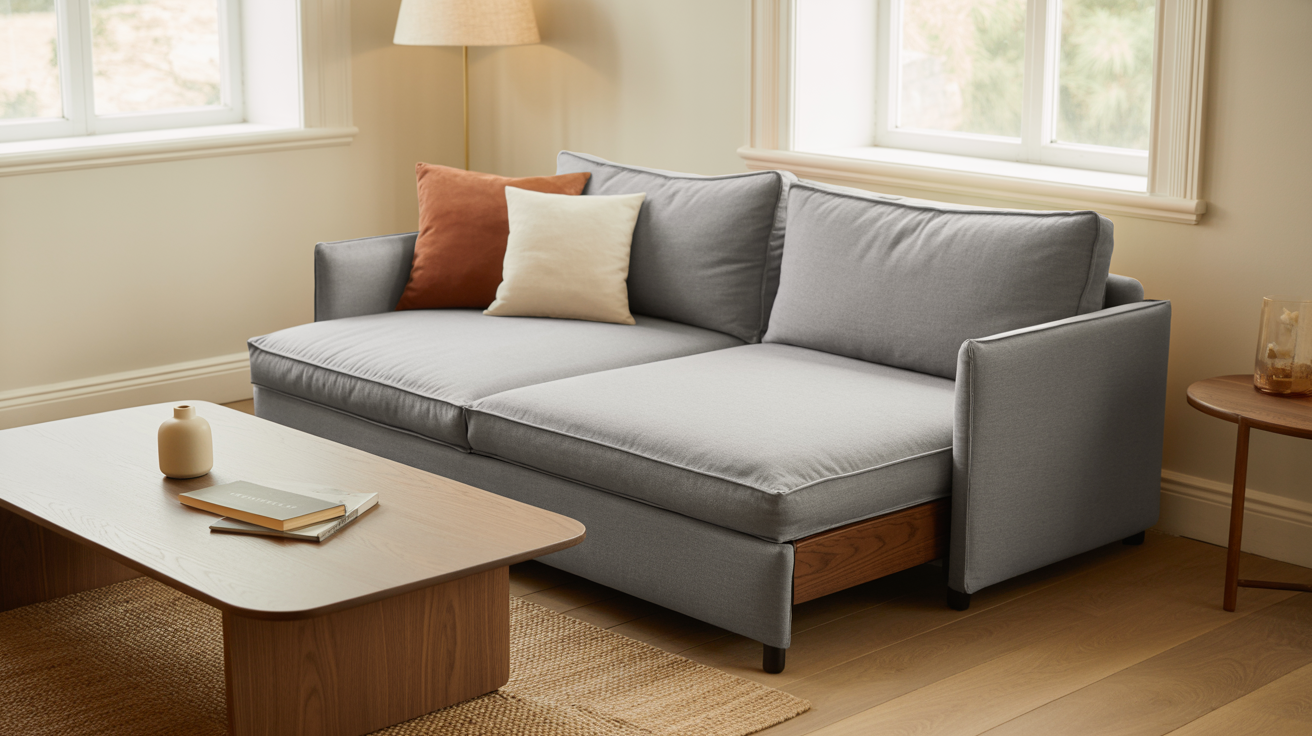
The best extra bed ideas for a living room are the ones that blend in so well that guests do not even realize they are looking at a bed. That is the whole point. A living room should look like a living room on regular days and function as a guest bedroom when needed, without any awkward furniture compromises in between.
Most people think adding an extra bed to a living room means sacrificing style. That assumption is outdated. The furniture market has come a long way and today there are options that look so much like regular living room pieces that even design-conscious visitors would not guess there is a sleeping surface hiding inside them.
The key is choosing pieces that serve a genuine daytime function first and a sleeping function second. Once that mindset clicks, the whole process of finding the right extra bed for your living room becomes a lot more straightforward and honestly, a lot more fun.
Why the Right Extra Bed Makes All the Difference in a Living Room
A poorly chosen extra bed ruins the aesthetic of an otherwise well-decorated living room. A bulky rollaway bed shoved in the corner or a thin camping mattress rolled out on the floor sends a clear message that the space was not really planned for guests. It feels improvised, and guests notice.
The right extra bed does the opposite. It adds to the room during the day by functioning as a proper piece of furniture, and it delivers genuine sleeping comfort at night without any visual compromise. That balance is completely achievable with the right options and a bit of planning.
I have rearranged my own living room more than once trying to find the right guest sleeping solution and the difference between a thoughtful choice and a hasty one is visible every single day, not just on the nights guests actually stay over. Getting this right is worth the time it takes.
7 Best Extra Bed Ideas for Living Room That Look Like Real Furniture
1. Sofa Bed: The Most Versatile Extra Bed for Any Living Room
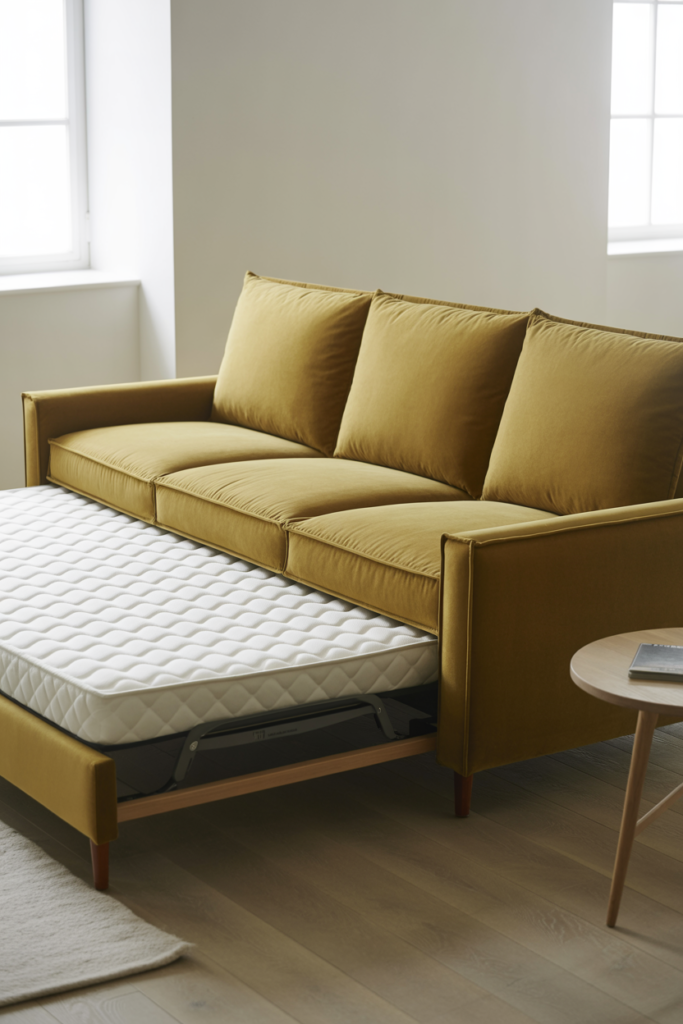
A sofa bed is the most popular extra bed solution for living rooms and it earns that reputation by genuinely delivering on both functions. During the day it works as a full sofa that seats guests, anchors the seating area, and contributes to the overall look of the room. At night the seat cushions come off and the sleeping surface folds out in under a minute.
Modern sofa beds look nothing like the heavy, blocky designs from previous decades. Today’s options come in slim-arm contemporary styles, mid-century silhouettes, and even sectional configurations that work beautifully in larger living rooms. The upholstery choices cover everything from performance linen to velvet to faux leather, so finding one that fits an existing room palette is genuinely easy.
The sleeping quality depends heavily on the mattress inside. A good sofa bed uses either a memory foam mattress or a pocket spring system rather than the old-style thin foam pad. I always recommend checking the mattress thickness before buying as anything under four inches tends to make for an uncomfortable night, which defeats the entire purpose.
2. Daybed With Storage: A Stylish Extra Bed That Works Hard All Day
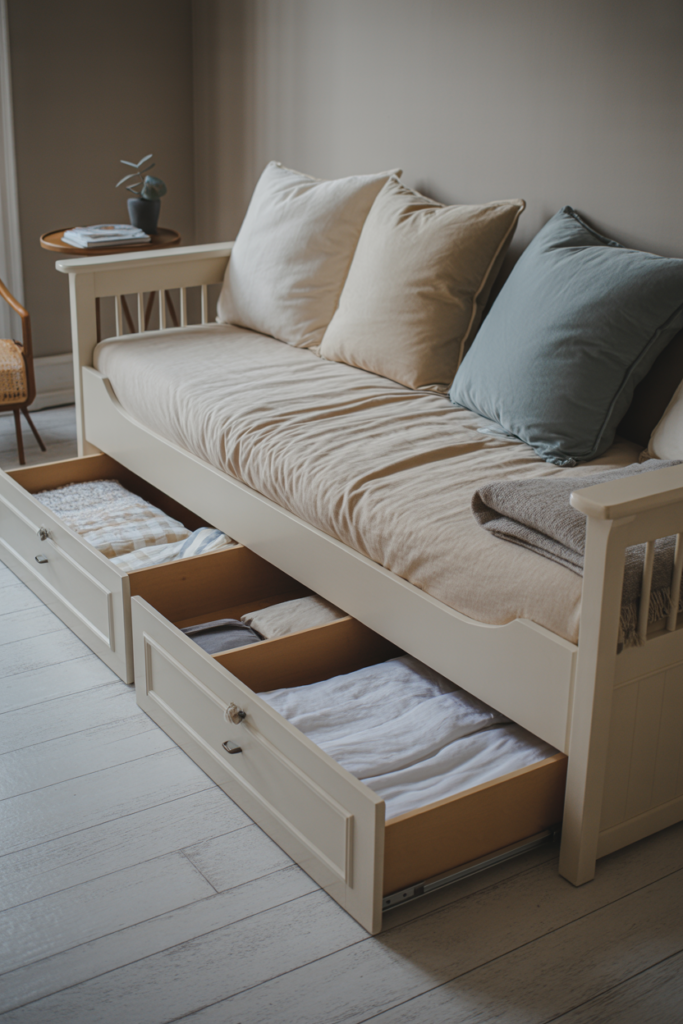
A daybed looks like a wide, low sofa with a backrest on one long side and open space underneath. It fits naturally against a wall in a living room and works as a lounge seat, reading spot, or casual seating area during the day. At night it converts instantly into a single bed without any unfolding or pulling required.
What makes a daybed particularly smart for a living room is the storage option that many models include underneath. Deep drawers built into the base store extra bedding, pillows, and throws so everything needed for a guest stay stays completely out of sight until it is needed. The room stays tidy and organized without any visible storage compromise.
I find daybeds work especially well in living rooms that double as home offices or reading rooms. The piece reads as intentional and considered rather than purely functional. Styled with good quality cushions and a textured throw, a daybed can genuinely become the focal point of a well-designed living room.
3. Murphy Bed With Built-In Shelving: The Best Hidden Extra Bed for Small Living Rooms
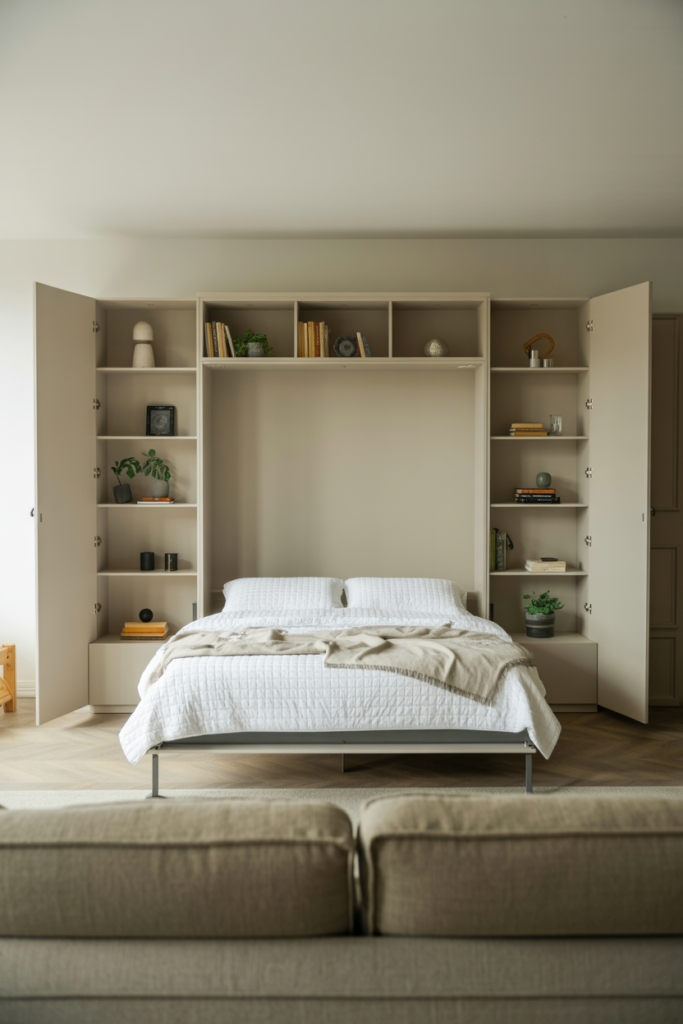
A Murphy bed folds flat against the wall inside a custom cabinet when not in use and pulls down into a full-size sleeping surface when guests arrive. The wall unit version with built-in shelving on either side is the smartest configuration for a living room because the shelving functions as regular display and storage space every single day.
From across the room the unit looks like a built-in bookshelf or media wall. Nothing about it suggests a bed is hiding inside. The closed cabinet doors have a clean, finished appearance that blends with the room’s overall aesthetic rather than standing out as a separate piece of furniture added as an afterthought.
The main investment here is upfront cost and installation. A quality Murphy bed with a surrounding wall unit runs higher than most other options on this list. But for a small living room where every square foot matters, the floor space it frees up during the day is genuinely transformative. I consider it the single most space-efficient extra bed solution available.
4. Storage Ottoman Bed: The Most Underrated Extra Bed in a Living Room
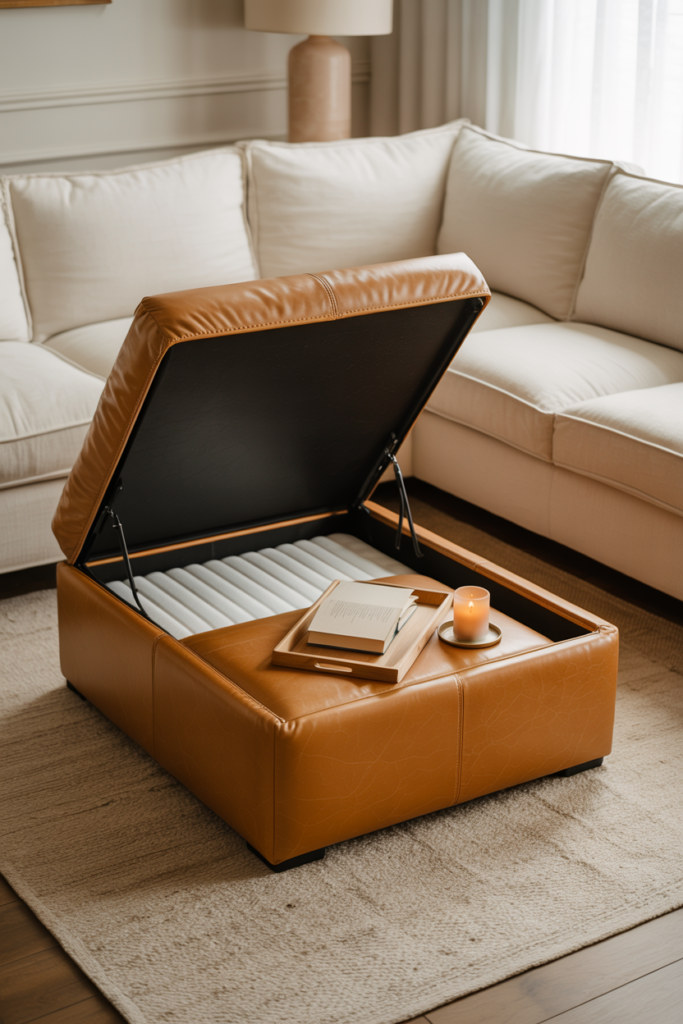
A storage ottoman bed is a large upholstered ottoman that opens up to reveal either a folded mattress inside or a pull-out sleeping platform underneath. During the day it sits in the center of the living room as a coffee table, a footrest, or extra seating. Nobody looks at it and thinks “bed.”
The sleeping surface works best for one adult or a child and is genuinely comfortable for occasional use when the ottoman uses a proper foam insert rather than a thin pad. Cube-shaped models in larger sizes give the most usable sleeping area when fully extended while still looking proportional as a coffee table during the day.
I keep a large square ottoman sleeper in my living room and it has handled solo overnight guests more times than I can count. The transition from ottoman to sleeping surface takes about thirty seconds. The upholstered exterior comes in dozens of fabric options so matching it to existing furniture is straightforward.
5. Trundle Bed Sofa: A Smart Extra Bed for Hosting 2 Guests
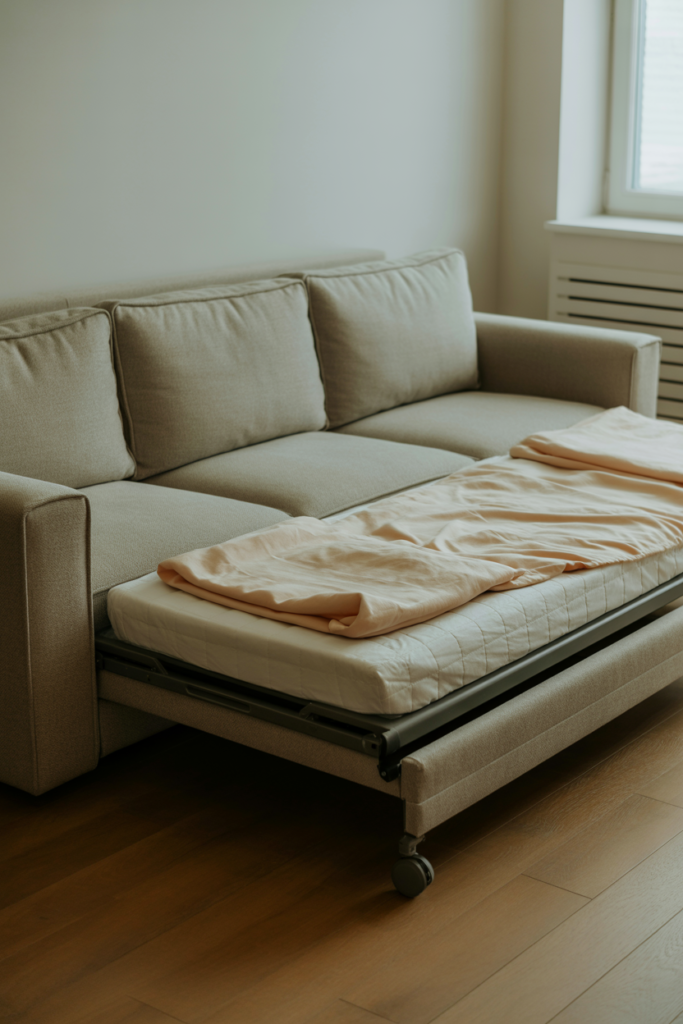
A trundle bed sofa combines a regular sofa or daybed frame with a second pull-out sleeping surface stored on wheels underneath the main frame. During the day the trundle sits completely hidden under the sofa base with no indication that a second bed exists beneath it. At night both surfaces pull out to sleep two people comfortably.
This is one of the most practical solutions for anyone who regularly hosts two guests at a time in a small living room. Two separate sleeping surfaces in one footprint is genuinely hard to beat from a space efficiency standpoint. The main frame functions as a normal sofa during the day and the trundle adds sleeping capacity without requiring any additional floor space when stored.
The trundle typically sits slightly lower than the main sleeping surface which is worth noting for guests, but most people find it perfectly comfortable for a night or two. For families with children visiting or friends who crash after a late night, a trundle sofa is one of the smartest investments a small living room can hold.
6. Convertible Loveseat Sleeper: The Best Extra Bed for Very Small Living Rooms
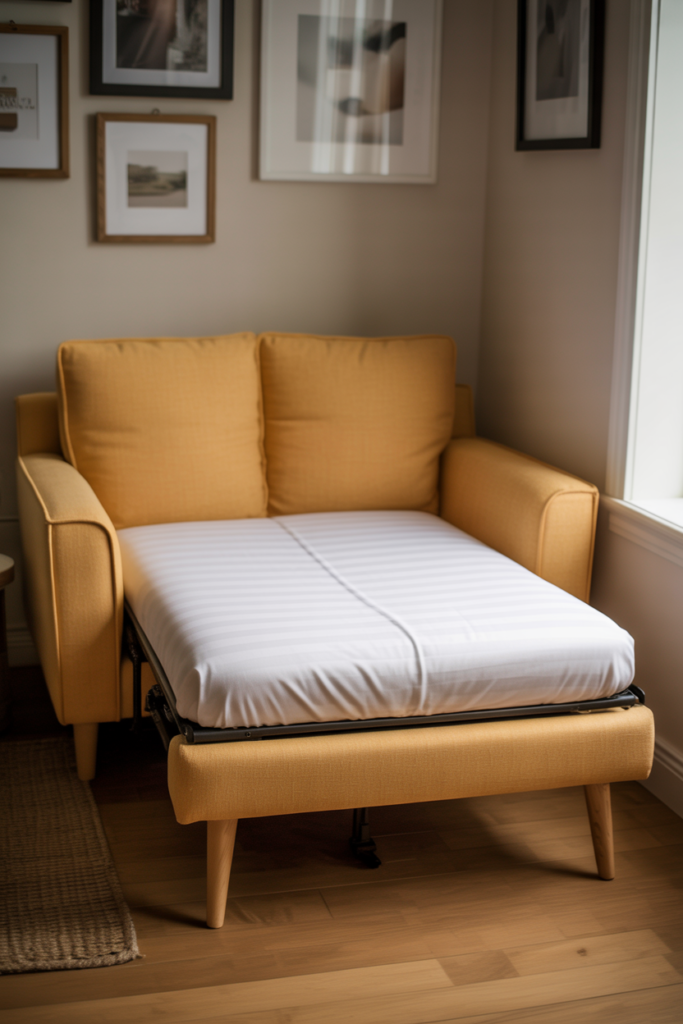
A convertible loveseat sleeper is a compact two-seat sofa that folds out into a narrow sleeping surface for one person. It takes up significantly less floor space than a full sofa bed while delivering the same daytime seating function in a smaller package. For very small living rooms or studio apartments, this size difference matters a lot.
Modern loveseat sleepers come in genuinely stylish designs with tight backs, tapered wooden legs, and clean upholstery options that look right at home in a well-decorated space. The sleeping surface is narrower than a standard single bed which works fine for one adult but does not comfortably sleep two.
The practical advantage of a loveseat sleeper over a full sofa bed is that it fits in rooms where a larger sofa bed simply would not work dimensionally. I have seen loveseat sleepers squeezed into living room corners where they function as a reading chair by day and a guest bed by night without the room ever feeling cramped or overcrowded.
7. Floor Sofa With Foldable Mattress: The Most Affordable Extra Bed That Still Looks Intentional
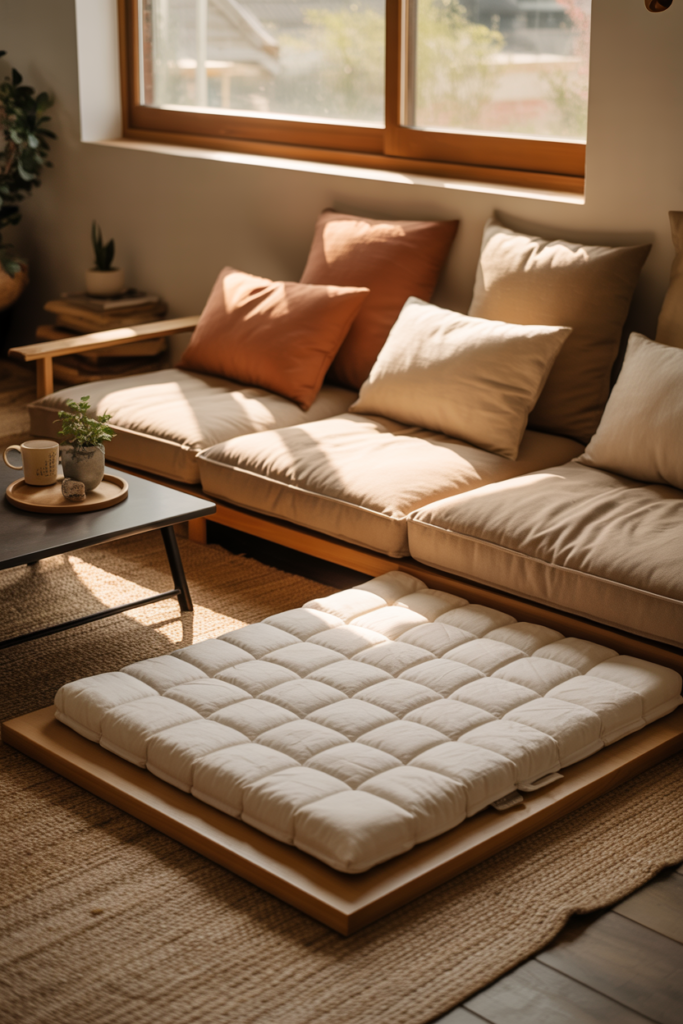
A floor sofa is a low-profile seating piece that sits directly on the floor with thick cushioned sections that unfold or rearrange into a flat sleeping surface. The aesthetic fits naturally into casual, bohemian, or Japandi-style living rooms where low furniture and relaxed proportions are already part of the design language.
The foldable mattress version takes this a step further by using a proper foam mattress that folds into a sofa shape during the day using cushion covers and bolster pillows to hold the form. When guests arrive, the covers come off and the mattress unfolds into a comfortable sleeping surface that sits close to the floor.
This is the most affordable option on this list by a significant margin and it works better than most people expect when the right mattress thickness is chosen. A four to five inch folding foam mattress provides genuine sleeping comfort. Styled with quality floor cushions and a textured throw during the day, it looks completely at home in the right living room aesthetic.
What to Check Before Buying an Extra Bed for Your Living Room
Before committing to any of the options above, a few practical checks save a lot of frustration later. These are the things worth confirming before any purchase.
- Measure your floor space: Know exactly how much room the piece takes up both in its daytime configuration and when fully extended as a bed.
- Check the mattress quality: Thickness and material matter more than anything else for sleeping comfort. Aim for four inches minimum.
- Match the daytime function: The piece should earn its place in the room every day, not just on guest nights.
- Consider your guest frequency: Occasional guests can work with simpler solutions. Regular guests need proper mattress quality and easy setup.
- Think about storage: Bedding needs to live somewhere. Pieces with built-in storage solve this problem cleanly.
Conclusion
Adding an extra bed to a living room does not mean compromising on style or living with furniture that looks out of place every day of the year. The seven options above all solve the guest sleeping problem while functioning as genuine, well-designed living room furniture during the day. From a sleek sofa bed to a cleverly disguised murphy wall unit to a stylish floor sofa, there is a solution here for every room size, every budget, and every aesthetic.
The best choice depends on how often you host, how many guests you typically have, and how much permanent floor space you can dedicate to the piece. Nail those three factors and the decision becomes much clearer. One well-chosen extra bed solution will serve your living room better than three compromise pieces ever could.
Start with the daytime function first, then confirm the sleeping quality, and you will end up with something that genuinely improves your living room rather than just solving a logistical problem. That is the standard worth holding out for.
Frequently Asked Questions
1. What is the best extra bed for a living room that looks like furniture? A sofa bed or a Murphy bed with built-in shelving both look completely like regular furniture during the day. A sofa bed reads as a normal sofa and a Murphy wall unit looks like a bookshelf, making both ideal for living rooms where appearances matter.
2. How do I hide an extra bed in my living room? A Murphy bed inside a wall cabinet is the most effective way to hide a bed completely. A storage ottoman sleeper and a trundle sofa are also excellent options as both store the sleeping surface entirely out of sight within the furniture piece itself.
3. What is the most comfortable extra bed for a living room? A quality sofa bed with a memory foam or pocket spring mattress of at least four inches thickness provides the most comfortable sleeping experience. Murphy beds also use full-size mattresses which deliver genuine bedroom-level comfort for guests.
4. Can a daybed work as both a sofa and a guest bed in a living room? Yes, a daybed works very well as both. Styled with back cushions and a throw during the day it looks like a sofa or chaise. At night the cushions come off and it functions as a comfortable single bed without any mechanical conversion required.
5. What extra bed works best for a very small living room? A convertible loveseat sleeper or a storage ottoman bed works best in very small living rooms. Both have a minimal daytime footprint and convert to a sleeping surface without requiring significant additional floor space when in use.
6. Are murphy beds practical for everyday living rooms? Yes, especially the wall unit versions with surrounding shelving. The shelving functions as regular storage and display space every day and the bed folds away completely, leaving the full floor area of the living room free during the day.
7. How do I make a guest feel comfortable sleeping in the living room on an extra bed? Good bedding makes the biggest difference regardless of which bed type you choose. Use a proper fitted sheet, a quality pillow, and a warm duvet. Adding a small side table with a lamp and a phone charging point nearby makes the setup feel genuinely welcoming rather than improvised.